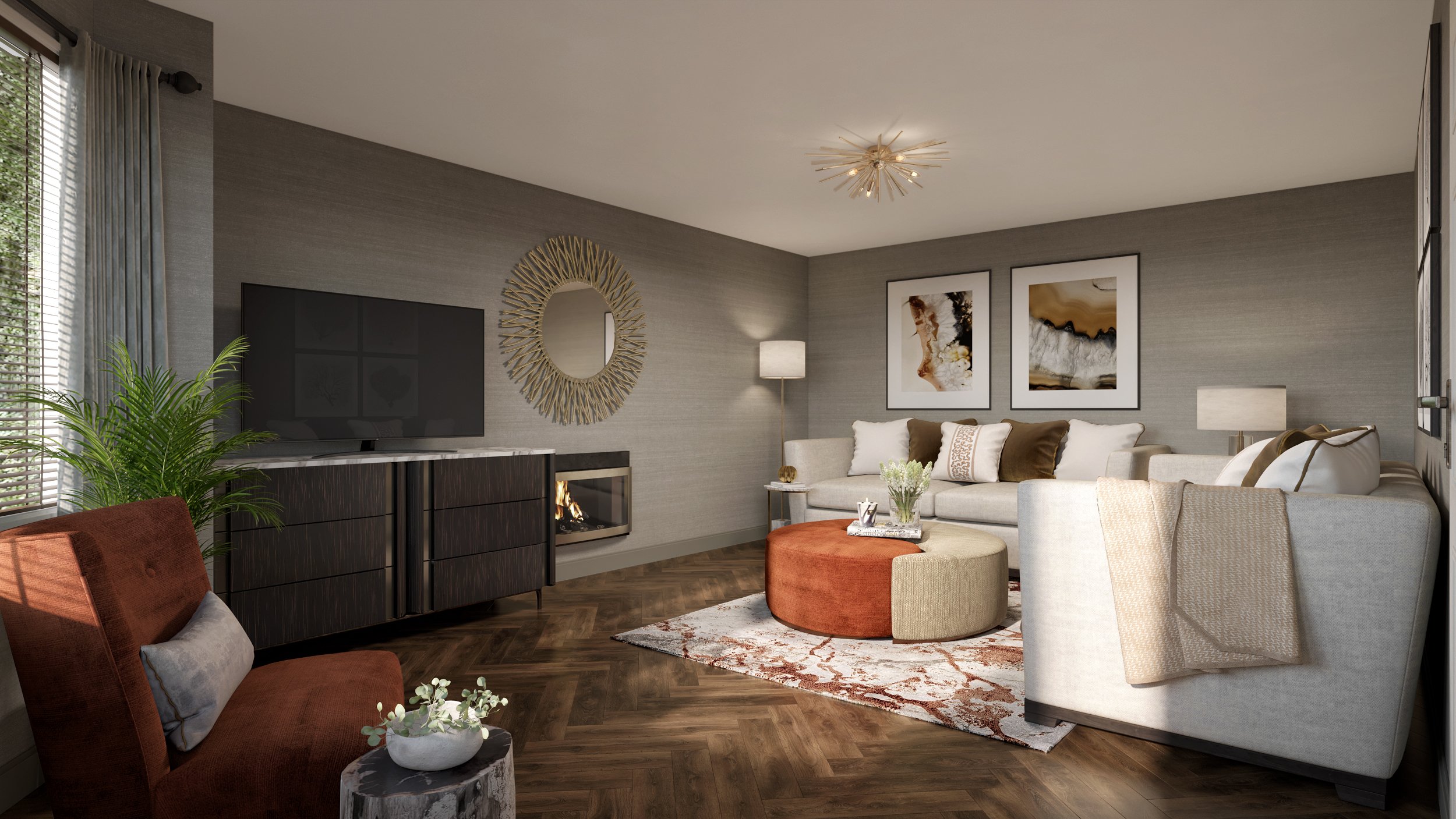
Rendered by Duke Renders for Heather Interior Design
If you're thinking about building a new home, extending your existing property or undertaking a major renovation, there's probably already a long list of things to think about.
You might be looking for an architect, speaking to builders, collecting inspiration and trying to picture what you'd like your finished home to look like. That’s a lot to begin with.
But before you get too far into the planning, there is something I'd really encourage you to consider, speaking with your interior designer.
This step is often overlooked, because many people think interior design comes much later, when the building work is finished and it's time to choose paint colours, furniture and soft furnishings to complete the overall look, which is great but there is much more value in beginning early with your designer.
But by then, some of the most important decisions have already been made.
The layout of your rooms, the position of doors and windows, lighting, electrical points and even the size and proportions of your spaces can all influence how your finished home looks and feels.
Interior design should be considered right from the beginning, working alongside your architect and contractor rather than being left until the end.
It's about looking at the bigger picture
An architect will consider the building as a whole, including its layout, structure, appearance and how it meets your requirements.
An interior designer looks at how those spaces will work for you on the inside.
And there's quite a lot more to that than choosing colours and fabrics and making it look pretty.
When I look at a floor plan, I'm already thinking about how the rooms will be furnished, how you will move around them, where furniture will sit and whether the proportions will work once everything is in place.
A room can look perfectly generous on an architectural drawing, but when you start introducing sofas, dining tables, beds and storage, things can look very different.
For example, will you have enough room to walk comfortably around your dining table and does the size suit your lifestyle? Is there sufficient space for the bedroom furniture you need? Will the living room accommodate the seating arrangement you have in mind without feeling cramped?
These are things worth considering before the plans are finalised, rather than discovering them once the building work is complete.
The little details that are easily overlooked
It's often the smaller details that can make such a difference to how a home works.
Think about where your bedside lamps will go, where you might want sockets for table lamps, whether you need lighting over a particular area of the kitchen or where a pendant should sit above your dining table.
If these things haven't been considered alongside the furniture layout, you could find yourself with sockets in the wrong places or lighting that doesn't quite work for how you intend to use the room.
The same applies to storage, generally you can never have enough storage especially in a family home. Window treatments are worth giving thought to, do you have enough space above the window for the type of window dressing you envisage? And the positioning of furniture, is your lifestyle more sectional seating for cosy family gatherings? Or a ‘U’ shape seating arrangement where it’s a space for entertaining and you don’t necessarily want to sit so close together. Taking time to think about how you live now with a little consideration for future-proofing.
I like to think about these things as part of the overall design rather than treating them as individual decisions to be made along the way.
It's much easier to plan for them at the beginning, when there is still flexibility to make adjustments.
Bringing all your choices together
One of the biggest challenges when building or renovating is the sheer number of decisions you have to make.
Flooring, tiles, kitchen finishes, worktops, bathroom fittings, wall colours, lighting, doors, handles and so much more. You will feel inundated with choice and current trends especially when you start looking in showrooms for inspiration. The current trends are their to wow you but will you still be in love with them years down the line.
You might love a particular tile or kitchen finish, but how will it work with the flooring you've chosen? Will the colours sit comfortably together? Will the finishes throughout your home feel connected?
This is where having someone look at the bigger picture can make such a difference.
Rather than making individual choices as you go along, an interior designer can help establish a scheme that works throughout your home.
It doesn't mean everything has to match, it’s great to have some individuality and personality but there should be a sense of continuity and thought behind the choices.
You also have someone to guide you through the options, narrow down the choices and help you feel confident that what you're selecting will work together.
It can help avoid unnecessary changes later
Building or renovating is a considerable investment and nobody wants to discover halfway through a project that something needs to be changed because it hasn't been properly thought through.
Perhaps the room isn't quite the right size for the furniture you want, a doorway would work better in a different position, or you realise you need additional electrical points once you've decided on your lighting and furniture.
Changes can sometimes be made, but once work has started they can involve additional expense, disruption and delays.
Of course, no amount of planning can account for every eventuality but having the interior design considered early gives you a much better opportunity to identify potential issues before they become more difficult to resolve.
It also means your architect and contractor have a clearer understanding of what you're trying to achieve.
Your home should work for you, not just look good on paper
Something I feel strongly about is that your home should reflect the way you actually live.
It's easy to get caught up in architectural drawings, beautiful inspiration photographs and all the lovely finishes available, but have you really thought about how you want to use each space?
Like we touched on before, do you enjoy having family and friends around? Do you need a separate space to relax? Is storage important? Do you have existing furniture, artwork or sentimental pieces that you want to incorporate?
These things matter.
I always want to understand the people who will be living in the home, not just the property itself.
It's about making sure that the finished result is not only beautiful but comfortable, practical and suited to your lifestyle.
Working together makes all the difference
An interior designer isn't there to replace your architect or contractor. We each have different areas of expertise and the best results come when everyone works together.
Your architect will develop the architectural design, while your contractor is responsible for carrying out the construction work within their agreed scope.
My role is to look after the interior design, bringing together the layout, furniture planning, lighting requirements, finishes, materials, furnishings and all the details that contribute to the finished home.
The designer works alongside your architect and contractor, providing the interior design information they need and helping to ensure that the decisions being made are consistent with the overall design.
It is much easier to have these conversations at the beginning than to try to make everything fit once the building is underway.
So, when is the right time to speak to an interior designer?
My advice would be to make contact when you're first considering your plans along ideally before your architectural drawings are finalised and before your contractor has priced the work.
You don't need to have everything figured out. Bring your Wish List or we can create one for you.
In fact, the earlier we have a conversation, the more opportunity there is to look at the spaces, discuss how you want to use them and consider the details that might otherwise be overlooked.
And if you've already appointed an architect, don't worry. It isn't too late. There is still real value in bringing an interior designer into the project before the construction work begins.
A little more thought at the beginning can make all the difference
Building or renovating your home is a big undertaking, and there are so many decisions to make along the way.
I believe the difference between a house that simply looks finished and one that feels completely considered for how you live your life often comes down to how well everything has been thought through from the start.
It's not just about choosing beautiful furniture or finding the right paint colour. It's about understanding how everything works together, making sure the proportions are right, the lighting is planned, the finishes complement one another and the rooms feel right for the people living in them.
That's what good interior design brings to a project.
If you're thinking about building, extending or renovating, I'd encourage you to have a conversation with an interior designer before your plans are finalised.
I'd be delighted to hear what you're planning and discuss how I could help you bring everything together, from the initial ideas through to a beautifully finished home.